
Installing You Spa
Installing You Spa
Apr 5, 2024
Installing Your Spa: A Simple Step‑by‑Step Guide
Getting a new spa is exciting, but a smooth, safe installation is what makes it easy to enjoy for years. Use this guide as an overview you can share with customers before they book an install.
1. Choose the Right Location
Pick a spot that is safe, convenient, and easy to access.
Make sure the surface is flat, solid, and level (concrete pad, reinforced deck, or properly prepared base).
Check there is enough space to walk around the spa for service and cover opening.
Keep it close to an electrical source and, if outdoors, consider privacy, shade, and protection from wind.
Avoid placing it directly under trees that drop a lot of leaves or sap.
2. Prepare the Foundation
Your spa needs strong, stable support to protect the shell and equipment.
Concrete pad: Usually 4 inches or more thick, reinforced and level.
Deck: Must be structurally rated to support the full weight of the spa when filled with water and people.
Other bases: Some spas use compacted gravel or spa pads—follow manufacturer recommendations.
If a contractor or installer is involved, have them confirm load‑bearing capacity and drainage so water does not pool under the spa.
3. Plan Electrical and Access
Spas draw significant power, so proper electrical work is critical for safety.
Most larger spas require a dedicated circuit and professional electrician.
Ensure wiring, breakers, and disconnects meet local codes and the manufacturer’s specifications.
Plan a clear path from the delivery point to the final location, measuring gates, steps, and tight corners.
Remove obstacles such as furniture, branches, or railings as needed before delivery day.
Never attempt electrical work yourself unless you are licensed and qualified.
4. Delivery and Placement
On installation day, the spa is carefully moved into place.
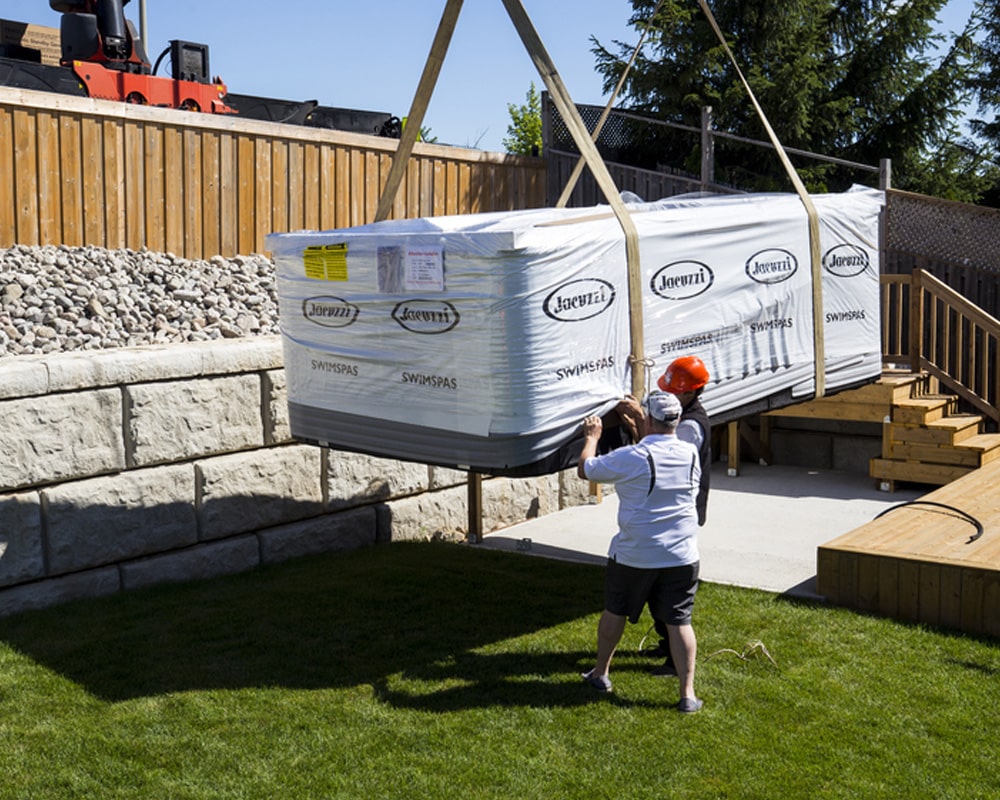
The spa is usually transported on its side with a spa dolly, cart, or crane if access is difficult.
Installers will position it on the prepared base, making sure it is level in all directions.
Small shims should only be used if approved by the manufacturer—never place the spa on an uneven or unstable surface.
Once in position, double‑check that there is enough clearance for the cover to open and for service doors to be accessed.
5. Hookup and Initial Setup
After placement, it’s time to connect and prepare the spa for use.
An electrician completes the final electrical connection and tests power.
The installer checks that all unions, valves, and fittings are tight.
Any required start‑up accessories (steps, cover lifter, handrails) are installed.
Before filling, the spa should be inspected inside for packaging materials, debris, or anything that could block jets or drains.
6. Filling the Spa
Proper filling helps avoid air locks and early equipment issues.
Place a hose in the spa, often through the filter area if the manufacturer recommends it.
Fill to the marked water line or to the level specified in the owner’s manual.
As it fills, check around the cabinet and equipment area for any leaks.
Once full, the power can be turned on following the manufacturer’s instructions.
7. Start‑Up and Water Treatment
Your first start‑up sets the tone for easy maintenance later.
Turn on the spa and verify pumps, jets, and controls work.
Set the temperature to your preferred range.
Add the recommended start‑up chemicals (such as stain and scale control, shock, and sanitizer).
Test and balance pH and alkalinity once the water is warm and circulated.
Most spas will take several hours or more to reach soaking temperature, depending on starting water temperature and heater size.
8. Final Checks and User Walkthrough
Before calling the installation complete, do a final review.
Confirm there are no leaks, error codes, or unusual noises from pumps or heater.
Check that lights, jets, and control panel functions operate as expected.
Go over basic operation with the homeowner:
How to adjust temperature and jets.
How to remove and clean filters.
How to open, close, and lock the cover.
Basic daily and weekly maintenance habits.
Providing printed or digital instructions, plus a simple maintenance schedule, helps new owners feel confident.
Safety and Ongoing Care Tips
A few reminders help keep the spa safe and in good condition.
Keep children supervised around the spa at all times.
Use non‑slip steps and good lighting around the spa area.
Maintain proper water balance and follow a regular cleaning schedule.
Schedule professional service if you notice leaks, error messages, or heating issues.
With a solid installation, safe electrical setup, and clear instructions, your spa will be ready for years of relaxing, trouble‑free use.
Installing Your Spa: A Simple Step‑by‑Step Guide
Getting a new spa is exciting, but a smooth, safe installation is what makes it easy to enjoy for years. Use this guide as an overview you can share with customers before they book an install.
1. Choose the Right Location
Pick a spot that is safe, convenient, and easy to access.
Make sure the surface is flat, solid, and level (concrete pad, reinforced deck, or properly prepared base).
Check there is enough space to walk around the spa for service and cover opening.
Keep it close to an electrical source and, if outdoors, consider privacy, shade, and protection from wind.
Avoid placing it directly under trees that drop a lot of leaves or sap.
2. Prepare the Foundation
Your spa needs strong, stable support to protect the shell and equipment.
Concrete pad: Usually 4 inches or more thick, reinforced and level.
Deck: Must be structurally rated to support the full weight of the spa when filled with water and people.
Other bases: Some spas use compacted gravel or spa pads—follow manufacturer recommendations.
If a contractor or installer is involved, have them confirm load‑bearing capacity and drainage so water does not pool under the spa.
3. Plan Electrical and Access
Spas draw significant power, so proper electrical work is critical for safety.
Most larger spas require a dedicated circuit and professional electrician.
Ensure wiring, breakers, and disconnects meet local codes and the manufacturer’s specifications.
Plan a clear path from the delivery point to the final location, measuring gates, steps, and tight corners.
Remove obstacles such as furniture, branches, or railings as needed before delivery day.
Never attempt electrical work yourself unless you are licensed and qualified.
4. Delivery and Placement
On installation day, the spa is carefully moved into place.
The spa is usually transported on its side with a spa dolly, cart, or crane if access is difficult.
Installers will position it on the prepared base, making sure it is level in all directions.
Small shims should only be used if approved by the manufacturer—never place the spa on an uneven or unstable surface.
Once in position, double‑check that there is enough clearance for the cover to open and for service doors to be accessed.
5. Hookup and Initial Setup
After placement, it’s time to connect and prepare the spa for use.
An electrician completes the final electrical connection and tests power.
The installer checks that all unions, valves, and fittings are tight.
Any required start‑up accessories (steps, cover lifter, handrails) are installed.
Before filling, the spa should be inspected inside for packaging materials, debris, or anything that could block jets or drains.
6. Filling the Spa
Proper filling helps avoid air locks and early equipment issues.
Place a hose in the spa, often through the filter area if the manufacturer recommends it.
Fill to the marked water line or to the level specified in the owner’s manual.
As it fills, check around the cabinet and equipment area for any leaks.
Once full, the power can be turned on following the manufacturer’s instructions.
7. Start‑Up and Water Treatment
Your first start‑up sets the tone for easy maintenance later.
Turn on the spa and verify pumps, jets, and controls work.
Set the temperature to your preferred range.
Add the recommended start‑up chemicals (such as stain and scale control, shock, and sanitizer).
Test and balance pH and alkalinity once the water is warm and circulated.
Most spas will take several hours or more to reach soaking temperature, depending on starting water temperature and heater size.
8. Final Checks and User Walkthrough
Before calling the installation complete, do a final review.
Confirm there are no leaks, error codes, or unusual noises from pumps or heater.
Check that lights, jets, and control panel functions operate as expected.
Go over basic operation with the homeowner:
How to adjust temperature and jets.
How to remove and clean filters.
How to open, close, and lock the cover.
Basic daily and weekly maintenance habits.
Providing printed or digital instructions, plus a simple maintenance schedule, helps new owners feel confident.
Safety and Ongoing Care Tips
A few reminders help keep the spa safe and in good condition.
Keep children supervised around the spa at all times.
Use non‑slip steps and good lighting around the spa area.
Maintain proper water balance and follow a regular cleaning schedule.
Schedule professional service if you notice leaks, error messages, or heating issues.
With a solid installation, safe electrical setup, and clear instructions, your spa will be ready for years of relaxing, trouble‑free use.

Safety and Ongoing Care Tips
A few reminders help keep the spa safe and in good condition.
Keep children supervised around the spa at all times.
Use non‑slip steps and good lighting around the spa area.
Maintain proper water balance and follow a regular cleaning schedule.
Schedule professional service if you notice leaks, error messages, or heating issues.
With a solid installation, safe electrical setup, and clear instructions, your spa will be ready for years of relaxing, trouble‑free use.
Safety and Ongoing Care Tips
A few reminders help keep the spa safe and in good condition.
Keep children supervised around the spa at all times.
Use non‑slip steps and good lighting around the spa area.
Maintain proper water balance and follow a regular cleaning schedule.
Schedule professional service if you notice leaks, error messages, or heating issues.
With a solid installation, safe electrical setup, and clear instructions, your spa will be ready for years of relaxing, trouble‑free use.